Netflix’s Oscar-Winning Western The Power of the Dog Turns a Montana Ranch Into a Chilling Battle of Secrets and Control
A sprawling ranch, two wealthy brothers and a new marriage become the foundation for a slow-burning psychological battle in The Power of the Dog, Jane Campion’s acclaimed Western drama now streaming on Netflix.
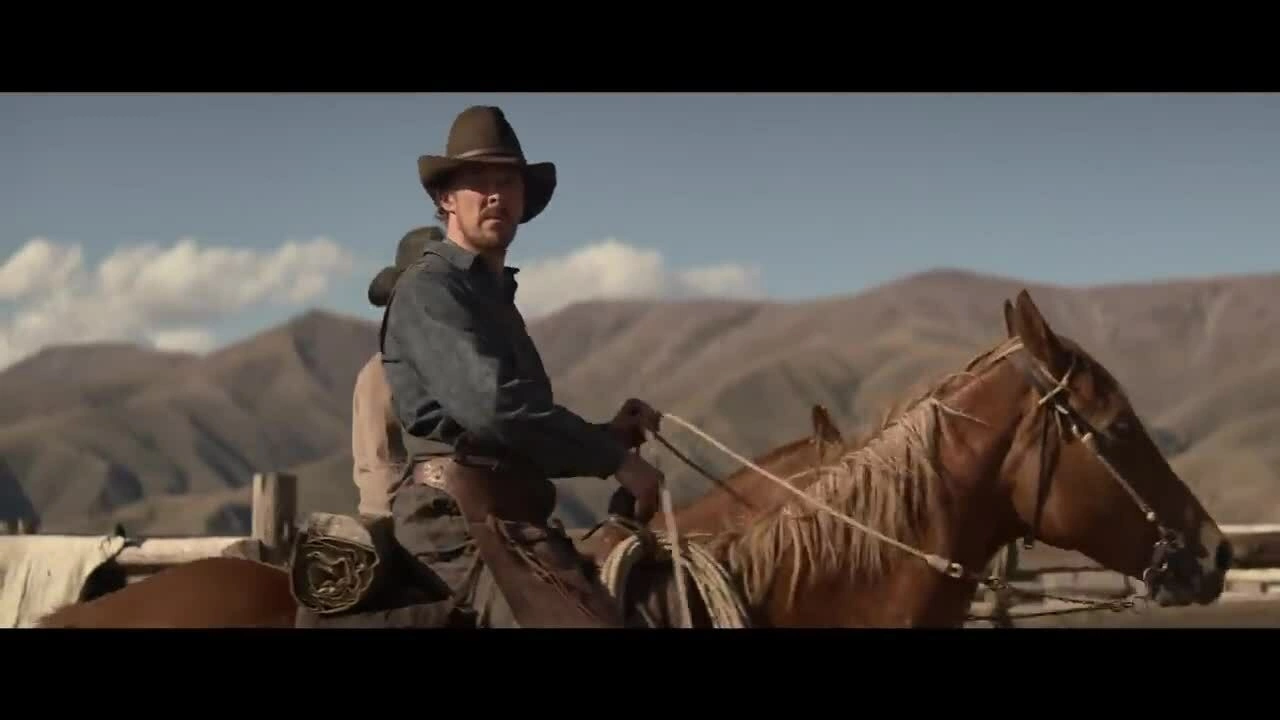
Set in 1920s Montana, the film stars Benedict Cumberbatch as Phil Burbank, a charismatic but intimidating rancher whose carefully controlled world begins to unravel when his brother George brings a new wife and her teenage son into their home. Netflix describes the film as an ominous, cerebral “slow burn” built around rivalry, mind games and long-hidden secrets.
Rather than relying on traditional Western shootouts and action, The Power of the Dog builds its tension through humiliation, resentment and a psychological contest in which appearances become increasingly unreliable.
Two Brothers Who Could Hardly Be More Different
Phil and George Burbank share ownership of one of the largest ranches in their Montana valley, but their personalities are strikingly different.
Phil is intelligent, commanding and deliberately cruel. He prides himself on toughness and frequently invokes the memory of Bronco Henry, the cowboy who taught him the skills and values he associates with ranch life.
George, played by Jesse Plemons, is quieter and more reserved. Where Phil dominates people around him, George tends to avoid confrontation.
Their already complicated relationship changes after they encounter Rose, a widowed restaurant owner played by Kirsten Dunst, and her son Peter, portrayed by Kodi Smit-McPhee.
Phil quickly targets both mother and son with ridicule. George reacts very differently: he comforts Rose, falls in love with her and eventually marries her.
For Phil, the marriage is an intrusion into a life he believed he understood.
Rose Arrives at the Ranch — and the Pressure Begins
When George brings Rose into the Burbank household, Phil makes little effort to conceal his hostility.
His campaign against her is largely psychological. Small gestures and carefully timed humiliations steadily undermine Rose’s confidence, while the enormous ranch begins to feel increasingly oppressive.
Kirsten Dunst’s performance allows Rose’s deterioration to unfold gradually. The character enters the marriage hoping for stability but finds herself living alongside a man who seems determined to make her uncomfortable in her own home.
Peter initially appears to be an even easier target.
Quiet, observant and unlike the ranch hands surrounding him, he immediately draws Phil’s attention. Phil mocks him, while Peter initially seems unwilling or unable to challenge the rancher directly.
But that relationship does not remain as straightforward as it first appears.
Peter Changes the Balance of Power
The film begins shifting once Peter spends more time around Phil.
Instead of simply avoiding the man who has tormented him and his mother, Peter becomes increasingly interested in Phil’s world. Their interactions gradually change, and Phil begins revealing parts of himself that he keeps hidden from almost everyone else.
It is here that The Power of the Dog moves furthest away from a conventional Western.
The apparent conflict between an intimidating rancher and a vulnerable young man becomes something more psychologically complicated. Phil’s carefully constructed identity begins showing cracks, while Peter proves considerably more perceptive than others may have assumed.
Netflix’s official description deliberately points toward this transformation: Phil continues tormenting Rose and Peter until long-hidden secrets begin emerging.
Those secrets reshape the audience’s understanding of the characters without requiring the film to abandon its restrained approach.
Benedict Cumberbatch Steps Far Outside His Familiar Roles
Much of the film depends on Benedict Cumberbatch’s performance as Phil.
The character dominates almost every environment he enters. He can intimidate without raising his voice, while his harsh treatment of Rose, Peter and even George establishes him as the ranch’s central force.
Yet Campion gradually complicates that image.
Phil’s obsession with appearing tough and self-sufficient sits alongside memories of Bronco Henry and glimpses of a private emotional life that he refuses to expose publicly.
RogerEbert.com praised the transformation, noting how completely Cumberbatch disappears into a character driven by cruelty, masculinity and deeply buried vulnerability.
Kodi Smit-McPhee provides an effective counterweight as Peter. His restrained performance makes it difficult to know precisely how much Peter understands at any given moment, an uncertainty that becomes increasingly important as the film progresses.
A Western Built Around Psychological Warfare
Visually, The Power of the Dog contains many of the ingredients audiences associate with classic Westerns: horses, cattle, isolated landscapes, ranch hands and vast stretches of wilderness.
Its central conflict, however, is largely internal.
Campion uses silence, glances and small shifts in behavior to create suspense. Jonny Greenwood’s unsettling score reinforces the sense that something is wrong even during scenes where very little appears to be happening.
That makes the film intentionally slow-moving. Netflix itself categorizes it as a “slow burn” and “mind game,” descriptions that capture its approach more accurately than simply calling it a Western.
The movie runs a little over two hours and is adapted from Thomas Savage’s 1967 novel of the same name. Campion both wrote the screenplay and directed the film.
The Film Became a Major Awards Contender
Released in 2021, The Power of the Dog went on to become one of the most acclaimed films of that awards season.
Its performances, cinematography, screenplay, score and direction all attracted major recognition, with the film receiving multiple Academy Award nominations.
Jane Campion ultimately won the Oscar for Best Director at the 94th Academy Awards. Cinematographer Ari Wegner and editor Peter Sciberras were among the film’s other nominees.
The recognition reflected what made the movie stand apart from many contemporary Westerns: Campion uses the genre’s familiar imagery to examine power, masculinity, loneliness and the difference between the identity someone projects and the person hidden underneath.
A Story That Rewards Patience
TRAILER BELOW
Viewers looking for a fast-moving Western may find The Power of the Dog deliberately restrained. Its tension accumulates slowly, often through details that initially seem insignificant.
That patience is central to the film’s design.
Phil initially appears to hold virtually all the power. Rose seems increasingly trapped by his presence, while Peter appears vulnerable in an environment built around an aggressive version of masculinity.
But the relationships on the Burbank ranch are never quite what they appear to be.
As Phil allows Peter closer, the balance between them begins to shift in ways that are easy to underestimate. By the time the film reveals the significance of seemingly minor choices made along the way, earlier scenes can take on an entirely different meaning.
That is ultimately where The Power of the Dog finds its strongest tension: not in asking who can dominate the ranch physically, but in slowly revealing which character has truly understood the game being played all along.