NETFLIX’S GRIPPING TRUE-STORY DRAMA STARRING RALPH FIENNES AND CAREY MULLIGAN REVEALS AN EXTRAORDINARY SECRET BURIED BENEATH AN ENGLISH FIELD
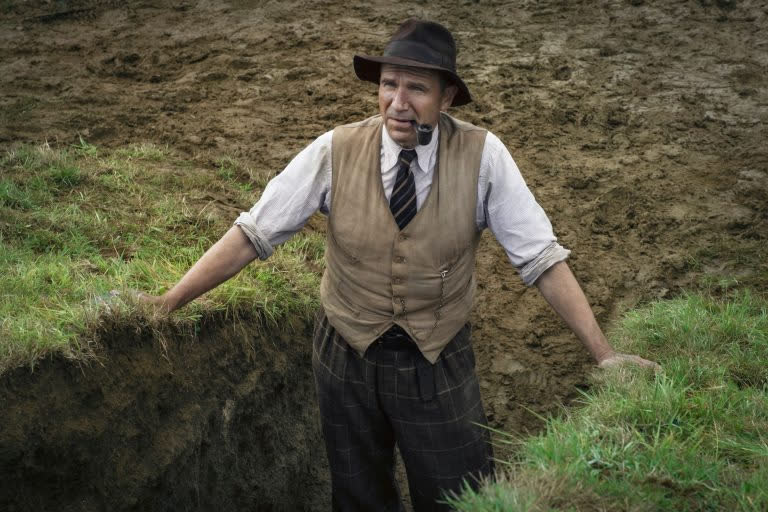
An ordinary-looking field in the English countryside concealed one of Britain’s greatest archaeological discoveries — and Netflix turned the remarkable true story into a moving historical drama starring Ralph Fiennes and Carey Mulligan.
Released on Netflix in January 2021, The Dig tells the extraordinary story of the 1939 Sutton Hoo excavation, a discovery that transformed historians’ understanding of Anglo-Saxon England.
Directed by Simon Stone and based on John Preston’s 2007 novel, the film follows two unlikely figures whose determination to uncover the past leads to something far greater than either could have imagined.
And what makes the story even more fascinating is that the remarkable events behind it actually happened.
A MYSTERY HIDDEN BENEATH THE SUFFOLK COUNTRYSIDE
Set in Suffolk on the eve of the Second World War, the film introduces Edith Pretty, a wealthy widow played by Carey Mulligan.
Living on her estate with her young son Robert, Edith has long been intrigued by several mysterious burial mounds scattered across her land.
Convinced that something important may lie beneath them, she hires Basil Brown, a self-taught excavator portrayed by Ralph Fiennes, to investigate.
Brown is knowledgeable and passionate about archaeology, although his lack of formal academic qualifications means he is not always taken seriously by established experts.
As he begins digging, the investigation takes an astonishing turn.
Beneath the earth lies evidence of an enormous ancient ship, buried centuries earlier.
The discovery suggests that the site may contain something of exceptional historical importance.
With Britain approaching war, the race to understand what has been uncovered becomes increasingly urgent.
THE REAL DISCOVERY THAT CHANGED BRITISH HISTORY

The Sutton Hoo excavation was a genuine archaeological breakthrough.
In 1939, Basil Brown uncovered the remains of an approximately 27-metre-long Anglo-Saxon ship burial on Edith Pretty’s estate.
The burial chamber contained extraordinary objects, including gold jewellery, weapons and ceremonial treasures.
The discoveries challenged earlier assumptions about the sophistication and wealth of early medieval England.
Among the most famous objects associated with Sutton Hoo is the magnificent Anglo-Saxon helmet, which has become one of the most recognisable archaeological treasures in Britain.
Although the identity of the person buried there remains uncertain, the site is widely associated with the royal world of seventh-century East Anglia.
The treasures are now held by the British Museum, while the Sutton Hoo estate is cared for by the National Trust.
What began as one woman’s curiosity about the mounds on her property ultimately became a discovery of international significance.
RALPH FIENNES BRINGS A FORGOTTEN HERO TO LIFE

Ralph Fiennes delivers a restrained and deeply affecting performance as Basil Brown.
Rather than portraying him as a conventional adventurer, the film presents Brown as a patient, determined man whose understanding of the land comes from years of practical experience.
His relationship with Edith Pretty forms the emotional heart of the story.
Both characters recognise the importance of preserving history, even as the world around them moves towards conflict.
Carey Mulligan portrays Edith as an intelligent, independent woman whose fascination with archaeology is matched by her awareness of her own mortality.
Their shared determination gives the film a quiet emotional power.
The story also explores the tension between Brown and the professional archaeologists who arrive once the excavation attracts wider attention.
His contribution risks being overshadowed by those with greater institutional authority.
That conflict adds another dimension to a story about recognition, class and the people whose work shapes our understanding of history.
MORE THAN A FILM ABOUT ARCHAEOLOGY
VIDEO BELOW
Although The Dig centres on an extraordinary historical discovery, its deeper themes concern time, loss and the desire to leave something meaningful behind.
As Britain prepares for war, the characters become increasingly aware of how fragile human life can be.
The ancient burial site serves as a reminder that entire civilisations can disappear, leaving only fragments of their existence beneath the earth.
Edith’s personal circumstances give this idea particular emotional weight.
The film combines sweeping countryside cinematography with intimate performances, creating an atmosphere that is both beautiful and melancholic.
Its slower pace allows the significance of the discovery to unfold gradually, making the eventual revelation feel all the more powerful.
THE NETFLIX FILM THAT UNCOVERS AN EXTRAORDINARY TRUE STORY
The Dig stands apart from conventional historical dramas because its greatest mystery is not invented.
The buried ship, the archaeological breakthrough and the two central figures were all real.
While the film dramatises certain relationships and events, its central discovery remains one of the most remarkable moments in British archaeology.
Ralph Fiennes and Carey Mulligan bring warmth and humanity to a story that might otherwise have been told only through museum exhibits and historical records.
What makes this Netflix drama unforgettable is the extraordinary contrast at its centre. While the world stood on the brink of another devastating war, a small group of people in Suffolk was uncovering evidence of a civilisation that had been hidden for more than a thousand years.
And beneath that seemingly ordinary English field lay a discovery that would change British history forever.