1. The Shocking Allegation Regarding the 1997 Phone Call
Further serialization extracts from Earl Charles Spencer’s explosive memoir, Swan Song: Diana, My Sister, have unveiled one of the most controversial claims yet concerning the immediate aftermath of Princess Diana’s fatal 1997 car crash.
:max_bytes(150000):strip_icc():focal(749x0:751x2):format(webp)/charles-spencer-princess-diana-king-charles-091626-61cf83ac1a5b43d984e743180c7dda29.jpg)
-
A “Giddily Elated” Tone: In the memoir, Earl Spencer recounts a phone conversation he had with then-Prince Charles shortly after the tragic news broke from Paris, alleging that the future king sounded remarkably light-hearted and “giddily elated” during the exchange.
-
Disbelief and Grief: Spencer describes being deeply stunned by the perceived lack of appropriate gravity or sorrow during the call, viewing it as an early indicator of the stark emotional disconnect that characterized the royal family’s handling of the tragedy.
-
The Context of Shock: While critics and royal historians have debated the interpretation of such high-stress, grief-induced phone calls, the revelation adds a deeply unsettling layer to the already fractured historical narrative between the Spencer family and the House of Windsor.
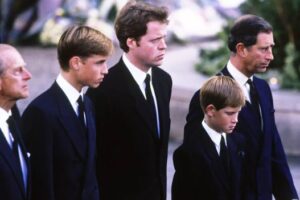
:max_bytes(150000):strip_icc():focal(719x286:721x288):format(webp)/prince-harry-princess-diana-funeral-090525-2-0f62b6839d0d4aa08bf67966f45f7ddd.jpg)
2. Intensifying the Pre-Publication Firestorm
The inclusion of this specific anecdote has escalated the pre-release media storm surrounding Swan Song, pushing tensions between the memoir’s publishers and Buckingham Palace to an all-time high.
-
Deepening the Historical Rift: Coming on the heels of leaked claims regarding funeral protocol battles, disputed memoirs, and allegations concerning the late princess’s private observations, the phone call allegation reinforces the book’s overarching theme of institutional coldness.
-
The Palace’s Guarded Stance: With the official publication date looming, Buckingham Palace’s prior warnings about how profound grief can distort memory remain the institution’s primary defense against a wave of disclosures threatening to permanently reshape public perceptions ahead of the upcoming 30th-anniversary milestone.