Theater Camp Turns Musical-Theater Obsession Into a Hilariously Sharp Comedy

Theater Camp understands something essential about musical theater: for the people who love it, there is no such thing as being too dramatic.
Molly Gordon and Nick Lieberman’s feature directorial debut throws audiences into the chaotic world of AdirondACTS, a struggling summer theater camp in upstate New York where ambitious children and equally theatrical adults treat every rehearsal as though Broadway itself is watching.
Shot as a mockumentary, the film deliberately embraces an inexpensive, naturalistic look. That approach makes the increasingly ridiculous behavior of its characters even funnier, creating an eccentric comedy that recalls the spirit of Waiting for Guffman and School of Rock while establishing an identity of its own.
A theater camp suddenly thrown into chaos

Every year, camp director Joan, played by Amy Sedaris, travels around New York searching for promising young performers to bring to AdirondACTS.
But after an especially impressive school performance leaves Joan in a coma, responsibility for the camp unexpectedly falls to her son Troy, played by Jimmy Tatro.
There is one rather significant problem: Troy knows almost nothing about musical theater.
More interested in becoming a crypto influencer than learning the difference between Miss Saigon and Wicked, he suddenly finds himself responsible for keeping his mother’s financially struggling camp alive.
His arrival immediately irritates the teachers who have devoted themselves completely to the theater world.
None are more unimpressed than Amos and Rebecca-Diane, played by Ben Platt and Molly Gordon.
Former campers who have grown up to become teachers themselves, the pair channel years of ambition, frustration and unrealized theatrical dreams into their work with the children.
Every glare and passive-aggressive remark aimed at Troy makes clear exactly how little faith they have in their temporary boss.
Ben Platt and Molly Gordon are perfectly matched
Platt and Gordon, childhood friends in real life, bring that familiarity to the screen.
Their characters have an intensely co-dependent relationship, and the chemistry between them becomes one of Theater Camp’s strongest ingredients.
Amos, in particular, embodies the strange collision between genuine passion and enormous ego that the film enjoys exposing. His insecurity and sense of entitlement are frequently hilarious, but the movie also gives those qualities enough emotional weight to keep him from becoming a simple caricature.
When Amos and Rebecca-Diane announce the summer’s productions through an absurdly intense a cappella performance, the movie makes its intentions perfectly clear.
These teachers may be nurturing the next generation of performers, but the campers are also an audience for their own unfulfilled ambitions.
That tension gives Theater Camp some of its funniest and most perceptive moments.
The supporting cast keeps the laughs coming

The film is not carried by its leads alone.
Alan Kim, known for Minari, makes an impression as an unusually precocious aspiring talent agent, while Noah Galvin is particularly effective as a stage manager whose abilities may extend much further than anyone initially realizes.
Jimmy Tatro also works well as the outsider dropped into a community whose unwritten rules he barely understands.
But the real strength is the ensemble.
The performers commit completely to the strange little ecosystem of AdirondACTS, where children speak with the seriousness of seasoned professionals and adults behave as though a summer production could determine the course of their careers.
Rather than simply mocking theater obsessives from the outside, the film clearly understands and has affection for them.
That distinction matters.
The jokes can be savage, but Theater Camp never loses sight of why these characters care so deeply about performing.
A comedy that knows its audience
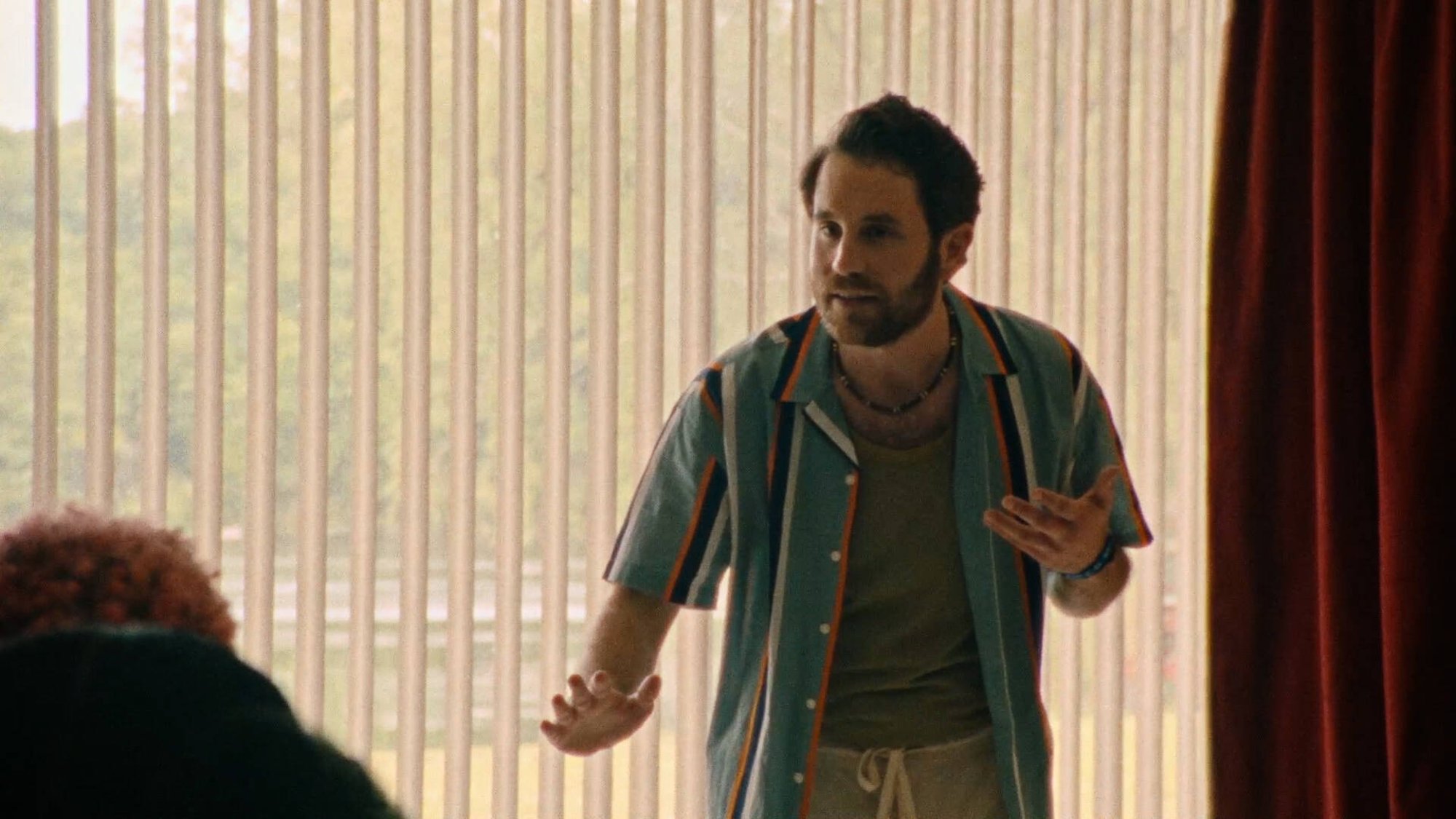
At just 92 minutes, the film moves quickly, packing its story with irreverent songs, cutting dialogue and increasingly absurd theatrical situations.
The mockumentary format allows tiny reactions to become punchlines: an uncomfortable stare, an irritated teacher or an overly serious child can be just as funny as the larger set pieces.
Gordon and Lieberman also understand when to allow something more sincere to emerge beneath the comedy.
For all the inflated egos and failed dreams surrounding AdirondACTS, the camp provides its young performers with a place where their enthusiasm is not merely tolerated but celebrated.
That affection gives the film an emotional center beneath all the theatrical madness.
Theater Camp could easily have become a collection of jokes aimed at musical-theater stereotypes. Instead, its sharp characterization and committed ensemble turn those stereotypes into recognizable, strangely lovable people.
By the time the final curtain falls, the film has accomplished exactly what a successful stage production hopes to achieve: it leaves you wanting an encore.
★★★★☆
TRAILER BELOW